Tuesday, August 4, 2020

He's Just A Rat

HE'S JUST A RAT
by
Max Elliot Anderson

In a quaint, stone cottage, on a narrow dirt road, lived a little old lady all alone. Most people in the area had no idea that a house even sat in this overgrown pecan grove. And few had ever seen Mrs. Albert C. Abernathy who lived inside. Those who did know her – the mailman for example – called her Ida. 

Each day on his route, he climbed over thick vines just to get to her mailbox. And almost every day, he brought her nothing but bills, bills, bills. He knew the little woman seldom received a letter, a greeting card, or anything special in the mail.

For Ida, every day started and ended the same. She’d awaken at six, put on a tea kettle, take out a loaf of dry bread, and sit down to breakfast…alone. Most days were uneventful, and ended when she turned out the lights, locked the doors, and went to bed. Locking the doors seemed silly because who knew she was in there in the first place?

Then one day something happened that would change Ida’s long lonely life forever. It began with a letter the mailman delivered that morning, after climbing over the vines just like he always had. After he’d gone, Ida shuffled out to the box, expecting to find another handful of bills she couldn’t pay. Oh, the bills were there, but something else was, too. She walked back to the cottage, closed the door, and sat at her kitchen table. 

Ida took a deep breath as she looked around the room. The ceiling above showed several stains from rain that seeped easily through shingles that should have been replaced years ago…if Ida only had the money to do that, but she didn’t. Her cupboards were nearly empty. Her eyes drifted over to the glass in one of her kitchen windows with a big crack. As she looked at the floor, large pieces of tile had crumbled long ago.

She stared again at the stack of envelopes from the day’s mail and noticed one, about in the middle of the pile, that looked different. Her crooked, wrinkled fingers shook as they reached out and slipped it from between all the others. Ida took out her wire rimmed glasses, the lenses covered with her own fingerprint smudges, and settled them onto her nose. 

“First Bank and Trust,” she said right out loud. “This can’t be good news.” A sharp letter opener rested against an even larger pile of unopened mail. Ida took the opener, slipped it under the flap, and slid it from one end of the envelope to the other. When she pulled the letter from inside, and opened, it, she nearly fainted after reading:

“We regret to inform you that, after your failure to contact us, the bank has no choice but to foreclose on your house. This will take place in two weeks…”

Ida dropped the letter to the floor, took a deep breath, put her hands to her face, slowly shook her head, and sighed, “Whatever shall I do?” She struggled to her feet, walked to the back door, and looked out. The yard behind her house had become even more overgrown than the front with brush, bushes, and vines. Ida hadn’t been in that part of the yard for so many years, she hardly remembered what was out there.

As she turned toward the kitchen again, her dimming eyes saw something move between the wall and a refrigerator that no longer worked.

“It’s a rat!” she screamed. Quickly she began searching for her raggedy straw broom. When she found it on the porch, she grabbed it and returned to where the rat had become hopelessly wedged between the refrigerator and the wall. 

“Try to come into my house, will you?” Ida demanded. With the broom in one hand, and a small bucket in the other, she moved with caution toward the helpless rodent. She placed the bucket behind the rat, and slipped her broom just beyond its head. With one, trembling move, Ida swooshed that rat into her bucket and hurried, as fast as a little old woman can hurry, out the door and into the back yard. 

She reached for a rusted shovel, leaning against an old, oak tree. Its long, wooden handle felt rough in her hand from years of wind, rain, and weather. Ida peered into the bucket. The rat didn’t seem to be moving. Is he alive or dead? She wondered. With one foot, she tipped the bucket on its side, then pushed it away. The rat tumbled out onto the dirt and weeds. Now Ida held the shovel in both hands, trembled as she raised it above her head and prepared to make sure that rat never bothered her again.

Just as Ida was about to slam the shovel down, with as much force as an old woman could, the helpless rat did something. He opened one eye. Ida noticed that, and eased her grip on the shovel for a moment. Then he opened his other eye and trued his head up slightly. Now that rat was looking directly into Ida’s eyes.

If the rat could speak, Ida was sure the look on his little rat face meant, “Please don’t. I’m just a rat.” But, of course, rats can’t talk. Still, that look made her stop. She lowered the shovel, and sat down on a fallen tree to think. When she did that, the rat closed his eyes and put his head down again.

What shall I do? Ida wondered. It wouldn’t be right to kill it. I mean, what did the rat ever do to me? Then she got an idea. She went back into the house, poured a small sip of her tea into a dusty glass, picked up a crust of bread, and hurried back outside. “He’s probably already gone,” she said. But when she reached the log, that little rat was still there, still struggling to breathe.

It was difficult for her, but Ida knelt beside the rat, poured tea around his mouth, and waited. An instant later, the rat put out his tongue as if he were asking for more. So she gave it to him. Next she broke up the bread crust and scattered small pieces near the rat’s mouth. After that, she went into her house and shut the door. During the day, Ida thought about the rat, but she didn’t go back out to check on him. If he’s dead in the morning, then that’s that, she thought.

Ida wondered about him as she turned out the light, pulled the covers up to her neck and went to sleep that night. But those thoughts were crowded out by the letter she had received from the bank. What shall I do? she thought as she drifted off to sleep.

The sun seemed extra bright when Ida awakened in the morning. Before putting on a kettle for her tea, she wanted to know if her rat was dead or alive. I say dead, she thought as she pushed open the back door, walked down stone steps, and crept over to the fallen tree. But when she looked closer, the bread pieces were gone. Not only that, the rat was gone, too.

“Well! I’ll probably find him in the house again,” she said with a huff.

For the next few days, Ida sat in her house, wondering what to do when the bank came to take over the property. She’d nearly forgotten about her rat until one morning when she walked to the back door and looked out.

“What’s that?” she asked right out loud. She opened the door and stepped outside. There, on the step, sat a shiny gold coin. Ida leaned down, picked it up, and held it in her hand. First she looked around the back yard, then down to the coin. “Where did you come from?” she asked with a giggle. Back inside, she placed the coin inside a carved, glass box. The next morning, the same thing happened. Now Ida had two gold coins. But on the third day, she found a key on the step where the coins had been. She held it between her thumb and finger and wondered how it got there and what it might open. The key was placed in the glass box along with her two coins.

A week went by, but there were no more gifts on her back step. Then early one morning, while she was still in bed, Ida thought she heard scratching sounds at her back door. It made her tremble all over. Still, she slipped out of her covers to see what it was. When she looked out the door, all Ida saw was a single pebble on the top step. Looking closer, she noticed another on the second step, then another and another.

Ida stepped into her slippers, put on her robe, and hurried outside. What she found were several pebbles that seemed to be arranged in a line for her to follow. So she did. Ida had to crawl under thick brush and over other fallen trees until she came to a stone fence. I didn’t even remember we had a fence, she thought. The line of pebbles turned to the right and led Ida to a corner where two walls met. There, the line ended. She reached out and pushed an opening into the bushes. What she saw next nearly knocked her backward. 

“It’s a door,” she said.

Sure enough, an old wooden door, built into the wall, sat hidden behind other thick tangled vines that grew along the stone wall. The old woman noticed that the door sat slightly open. Just then, a small head popped out. 

Seeing that almost cause Ida to trip over a dead branch on the ground. “My rat!” she said. 

The rat smiled back and then pushed the door open wide. When Ida bent over and looked inside, she saw that her rat was standing next to a large, wooden lockbox. “The key,” she said. The rat nodded. She reached out and tried to move the box, but it was far too heavy. Then the rat went around to one side, and came up with another gold coin. Ida noticed that he had scratched a hole into the soft, rotted wood of the old box and made an opening.

Over the next two days, Ida made several trips between her cottage and the stone fence. The first was to get the key. When she returned to the lockbox, she was delighted to see that her key fit the lock perfectly. She turned the key, heard a loud click, and then with both hands, lifted the top. Inside she found a pile of gleaming, gold and silver coins. Each time she came to the fence, she took as many coins as she could carry back in her apron to her cottage. Finally there were no more of them in the wooden box.

The next day, Ida heard a knock at her front door. Who could that be? She wondered. No one ever comes to my door anymore. But when she turned the knob, and opened her door, she saw the sheriff and a man wearing a dark suit. Both men had scratches on their hands and faces from the thorns and vines. 

“It’s time to leave your cottage,” the sheriff told her. The banker kept a stern look on his face.

Ida held up her hand. “Just a moment,” she said, turned, and left the men standing outside. In an instant she returned with a handful of coins, held them out and said, “Will these help?”

The banker took one of the coins, held it close, and studied the markings. “How many of these do you have?”

Ida shook her head. “I stopped counting after one hundred.” Then she smiled, covered her mouth, and giggled. 

The men left with instructions that she should come into town and settle her debts. Ida did that after meeting with a lawyer. While she was in his office, she also had him draw up some special papers.

A few days later, several men came to Ida’s cottage. They spent the next week clearing out all the thorns, brush, vines, and fallen trees from her front and back yards. Other men arrived to fix the roof, replace the floors and windows, and make all the much needed repairs on Ida’s home. Finally, they built a small building in the back yard, near the door in the stone fence. It looked just like Ida’s cottage, only smaller. The men took the lock from the wooden lockbox and fitted it into the front door of the smaller cottage. 

When everyone had gone, Ida went outside to see the work that had been done. As she strolled across the back yard, she saw something. Her rat stood near the small cottage, but he wasn’t alone. His family waited with him until Ida came to them. She wasn’t sure they’d understand, but she told them anyway. 

“This cottage now belongs to you. I’ve made sure that, as long as your family lives, you will have your own cottage to live in.” A small tear ran down her wrinkled cheek. She took a key from her apron pocket, leaned down, placed it in the lock, and opened the door. 

The rat family looked up at her but didn’t seem to understand. Then Ida gave the key to her rat and pointed toward the door as she nodded. One-by-one, he and his family entered the small cottage.

“You saved my home and you saved my life,” Ida said.  “I can never thank you enough.”

Ida and the small family of rats lived happily as neighbors for several years. And long after Ida was gone, her rat and his family had a home of their own for the rest of their lives.


Books by Max Elliot Anderson can be found on Amazon at: https://www.amazon.com/s?k=max+elliot+anderson&ref=nb_sb_noss_1 

Review: Pop-Up Volcano!

I went through this amazing book with a five and eight year-old and both were totally fasciated. The pop-up pages are nothing short of spectacular. This will make an excellent resource for anyone studying volcanoes in school, writing a report, or participating in a science project concerning volcanoes. Both of my young readers kept flipping back to the pop-up pages again and again. 

A real favorite turned out to be the Volcanoes Under the Sea page. The kids couldn’t believe something like that could happen underwater. 


From the publisher:

Watch out! Explosive content! Science, history, and culture are brought to life through vibrant illustrations and riveting pop-ups in Pop-Up Volcano! that take you right to the edge of the crater.

Have you ever wondered how volcanoes are formed? Did you know that there are different types of eruptions? Pop-Up Volcano! tells you everything you’ve always wanted to know about volcanoes with fact-packed text―and pop-ups! Discover the science behind volcanic eruptions; what happens when magma meets water; the kinds of creatures that make their homes next to these mountains of fire; and what the Hawaiian goddess Pele has to do with all of this.

This fascinating book features detailed illustrations and stunning paper engineering for amateur volcanologists and nature lovers. Readers will delve deep beneath the surface of our planet, witnessing some of the most devastating moments in recorded history, including a mysterious volcanic eruption that occurred during the Middle Ages and the eruption of Mount Vesuvius outside Pompeii almost two thousand years ago.

Illustrated in color throughout.

Max Elliot Anderson - Adventures and Mysteries for Readers 8 - 13

Thursday, June 25, 2020

100 Things to See in the Night Sky, Expanded Edition

Have you ever looked into the night sky and wondered where a certain star or constellation was? This came into clear focus for me several years ago when I became stranded and lost in the Arizona wilderness at high altitude. See my “True Survival Adventure” at https://www.blogger.com/blogger.g?blogID=38727967#editor/target=post;postID=4351858055115211106;onPublishedMenu=allposts;onClosedMenu=allposts;postNum=8;src=postname 

Once we were able to locate the North Star, we could chart a course back to safety the next morning.

But we don't need to be facing disaster in order to benefit from this updated book. The photographs are also fabulous, and the charts are informative.


Discover the amazing wonders of the night sky with this expanded edition to 100 Things to See in the Night Sky, perfect for every amateur stargazer and armchair astronomer! 

Keep your feet on the ground and experience the night sky to the fullest by exploring planets, satellites, and constellations with this all-inclusive reference guide to space. 100 Things to See in the Night Sky, Expanded Edition is full of information on the many amazing things you can see with a telescope, or just your naked eye!

From shooting stars to constellations and planets to satellites, this book gives you a clear picture of what you can see on any given night. Learn about the celestial bodies that have captured people’s imaginations for centuries, with specific facts alongside traditional myths and beautifully illustrated photographs and star charts that will help you know where to look for the best view.

With this illuminating guide, you’ll enjoy hours of stargazing, whether you’re traveling, camping, sitting in your back yard, or simply flipping through the beautiful images in this book.

Saturday, May 9, 2020

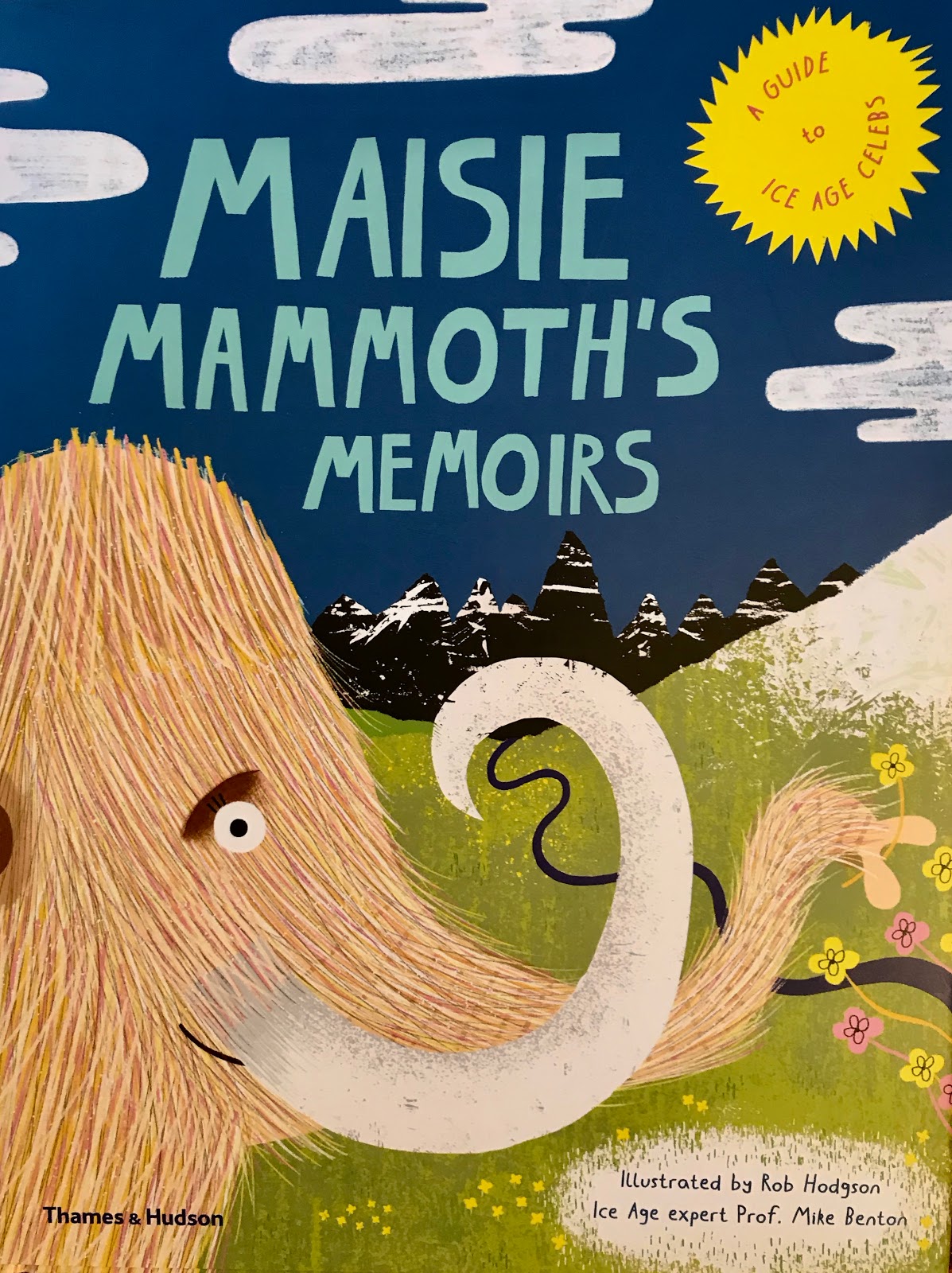
If I Had A Sleepy Sloth - Maisie Mammoth's Memoirs - The Big Book Of Blooms - Hoot And Howl Across The Desert....Four NEW titles from Thames & Hudson

     Four NEW titles from Thames & Hudson

Here are four of the latest releases from Thames & Hudson. To say they are colorful and beautifully illustrated would be understatements.

Our four year old granddaughter was quickly attracted to The Big Book Of Blooms because she loves plants and flowers. She sat down and thumbed through the pages.

Next I read her the story, If I Had A Sleepy Sloth, which was an immediate hit.

Our seven year old granddaughter spent time with Maisie Mammoth's Memoirs. And what child isn't interested in big animals and the people who lived during the time when they roamed the earth?

I could see these girls using a book like Hoot And Howl Across The Desert, and Maisie Mammoth's Memoirs for future research projects at school.
I look forward to sharing these books with our three other granddaughters from Chicago the next time they visit.

If I Had A Sleepy Sloth


From the publisher:
A humorous and entertaining tale about a little girl and her pet sloth that imagines life at a much slower pace.
From the duo behind If I Had a Dinosaur, Gabby Dawnay and Alex Barrow’s If I Had a Sleepy Sloth is a charming and imaginative tale about taking the time to slow down.
Have you ever wondered what the best kind of pet is? It’s a sloth, of course! When a little girl imagines experiencing a slower pace of life, she can’t think of a better companion than a sleepy sloth. She could spend almost an entire day just taking a morning walk with her sloth. When the little girl introduces her sloth to her hairdresser, the hairdresser isn’t pleased to discover the moss and moths (ewww!) that live in its fur, but what does that matter when her sloth is a champion on the jungle gym and amazing at climbing trees because of its super gripping skills!
With vibrant illustrations and playful rhymes, If I Had a Sleepy Sloth is a laugh- out-loud story that imagines having a sloth for a pet and provides a welcome alternative to the fast pace of modern life.


Maisie Mammoth's Memoirs


From the publisher:
This enchanting, humorous history of Ice Age beasts is told by the “it” girl of the period, Maisie the woolly mammoth.
Ice Age “it girl” Maisie Mammoth introduces us to all her glamorous friends in this humorous history of prehistoric beasts. Maisie’s Ice Age who’s who reveals the defining characteristics of some of the most memorable creatures from prehistoric times.
Maisie’s memoir includes tales about Stella the saber-toothed cat, whose megawatt smile contained ten-inch canines; the fiend we all love to hate, Victor the Villain, a forty-three-foot mega-snake who could swallow a crocodile whole; and the slightly more camera-shy Gavin the giant ape, who is rumored to have inspired the myth of the Yeti! It is the second book in a series, which started with Tony T-Rex’s Family Album, that brings animals from the past alive for young children.
Featuring the quirky illustrations of Rob Hodgson, Maisie Mammoth’s Memoirs stands apart with its unforgettable characters and witty approach to paleontology based on the latest scientific research―look out for tips on how to defrost a woolly mammoth!

The Big Book Of Blooms


From the publisher:
The next installment in the popular Big Book series is a fascinating introduction to some of the most magnificent and surprising flowering plants from around the world.
In The Big Book of Blooms, the next installment in the wildly successful Big Book series, Yuval Zommer’s charming illustrations bring to life some of the most colorful, flamboyant, and unusual flowers from across the globe.
In the opening pages, readers will learn all about botany, including how to recognize different types of flowers. Subsequent pages illustrate the various habitats that are home to flora such as pitcher plants, the giant water lily, and the weirdly wonderful corpse flower. Readers will discover which flowers are endangered and why some blooms are fragrant or colorful, not to mention grisly details about carnivorous and poisonous flowers.
This title pairs picture-book charm and concise, informative text to create a beautiful book for children to return to. Zommer’s quirky illustrations appeal to young readers, who will relish these fun and amazing facts about the world’s most exciting plants.


Hoot And Howl Across The Desert


From the publisher:
A beautifully illustrated and fascinating exploration of what life is like for animals in some of the world’s harshest desert environments, where only the toughest creatures survive.
Discover the remarkable plants and animals that live in the world’s driest climates―both hot and cold! With beautifully illustrated landscapes, this book proves just how much life exists in the world’s deserts. Travel around the globe and encounter hundreds of rare and little-known plants and animals that thrive in dry environments. Learn about nocturnal species who occupy the deserts, common survival tactics, lethal creatures to watch for, and how the desert food chain functions.
Hoot and Howl Across the Desert is an engaging investigation of some of the most extreme environments on Earth, from California’s Mojave Desert to the Arctic and from the Sahara to the Australian outback. With graphic illustrations that draw stylistically on folk art local to each desert, Vassiliki Tzomaka provides a level of detail that will satisfy even the most curious reader.


Find information about my adventures and mysteries for middle grade readers. https://middlegradeadventureandmystery.blogspot.com


Wednesday, May 6, 2020

(3) Buddy's Big Surprise - A FREE Short Story for Kids Who Are Stuck at Home

Buddy's Big Surprise

In the early spring, while the evenings were still cool, a young squirrel stuck his head out of the nest, high up in a mighty oak. His name was Buddy. Up until today, Buddy had stayed nestled inside where it was warm and dark. Rain couldn’t touch him in there, and he was safe from the wind. Still Buddy knew it would soon be time to leave the nest.
“But I don’t wanna leave the nest,” he told his mother early one morning. “Why do I have to go?” 
“Because,” she answered him in her soft voice. “It’s the way of a squirrel to go into the world and find something to eat.”
“Won’t you bring me food?” he asked.
His mother only shook her head. “One day you’ll want your own nest. And you have a great purpose in the forest. You’ll see.”
Buddy didn’t like the sound of that. He didn’t like the sound at all. It wasn’t long before he climbed to the bottom of his tree, along with his mother, brother, and sister. Their mother showed them how to find food down on the ground. 
“This is very important,” she began. “You’ll be looking for nuts, acorns, fruit, and seeds.”
Buddy made a face. “Seeds? Yuck!”
“They aren’t bad, you’ll see. Now follow me.” She took them into a nearby farmer’s field where the young squirrels found more corn on the ground than they could possibly eat. Their mother showed them how to gather kernels of corn, acorns, and nuts, and bury them in the ground for later. Buddy learned how food could be waiting for him just under the next leaf.
Mother squirrel sat with her children near several tall ferns. “This is the most important lesson of all,” she began. “If you’re ever in danger, a squirrel simply turns, runs to the nearest tree, and climbs as fast as he can. You’ll be safe up there.”
Buddy shook his head. “Not me he said,” as his little chest puffed out. He clenched his two front paws and punched into the wind. “I can take care of myself.”
With a stern look, his mother said, “You must do as I say.”
The young squirrels went back to searching for food until, late in the afternoon, Buddy looked around. “Hey,” he said to the others, “Where’s Mom?” They only shook their heads. He looked up where an Eagle soared in the sky. Wish I could fly like that, he’d thought. Hope he didn’t catch my mom. Right then Buddy decided to try flying. He grabbed two dead leaves off the ground and climbed up the nearest tree. About four branches up, he stopped climbing and scurried out onto the limb.
“I’m gonna fly,” Buddy called out to the other squirrels. They looked up and laughed. 
“Squirrels can’t fly,” one of them said.
Buddy winked. “What about flying squirrels?”
“You’re not a flying squirrel,” another answered with a giggle.
“Oh yeah? Watch me.” With that, Buddy began flapping the leaf in each paw. When he’d gotten them going as fast as he could, he stepped off the branch. But no matter how hard he tried, there was no way Buddy was going to fly. He fell to the ground like a ripe walnut.
“Look!” a squirrel on the ground said with a laugh. “Another nut falls from a tree.”
Buddy got up off the ground, brushed his fur, and grumbled, “Those dumb leaves probably weren’t big enough.” Then he walked away while the other squirrels kept laughing.
When he reached the stream, Buddy looked down just as two big fish swam by. 
Wish I could swim under water, he thought. He moved right up to the edge of the bank so he could get a closer look. That’s when something terrible happened. The dirt under his feet broke away, dumping Buddy into the cold water. His head went under and he found out very quickly that squirrels weren’t meant to breathe under water. He came up coughing, sputtering, and gasping for breath. In the distance he saw a beaver making repairs to the beaver dam. “Not even gonna try that,” he said with a sigh.
After he’d sat in the sun to dry, Buddy watched as a bunny hoped past him. I could do that, he thought. Soon he stood up on his two hind feet and jumped as hard as he could, but he didn’t go as far, and he didn’t go as fast. 
Still, it didn’t stop Buddy. Like the bunny, he began to hop, hop, hop along the trail. That’s when another rabbit stopped and asked him, “What are you doing?”
“I’m hopping, just like a rabbit.” 
At first the bunny didn’t do anything. Then he began laughing. He laughed and he laughed so hard, it made him fall on the ground where he held his stomach and rolled around in the grass. When he finally caught his bunny breath, the rabbit said, “But you’re a squirrel...not a rabbit.”
Buddy spent the rest of the afternoon, and most of the next day, watching other animals in the forest. Each time he saw a new one, he did his best to do what it did. No matter how hard he tried, nothing seemed to work. Finally he slumped down under a bush and stared at the ground.
“What’s the matter, Buddy?” a familiar voice asked.
Without even looking up Buddy said, “Grandpa?”
“Sure is. I think you’re just about the saddest squirrel I’ve ever seen.”
Buddy slowly looked up. A small tear ran down his face. “I’ve tried to be like everybody else I’ve seen in the forest, but it’s no use. I’m only a useless squirrel” He looked down again, let out a deep breath, and sniffed.
“Useless squirrel?” his grandfather demanded in a loud voice. “Are you kidding?”
“Yeah, I can’t do anything special.”
His grandfather moved closer. “You see, we all have a place in this world. The beaver is best at building things. Birds can fly in the sky. And fish can breathe under water. But you...you were made for a special purpose.”
Buddy looked up again as he remembered his mother telling him that he had a purpose. “What’s mine?” he asked.
“Why, you were made for planting.”
Buddy swelled up with pride. “I was?”
“Each of us has a job to do that only we are the best at doing.” Grandfather squirrel looked around the forest. He waved his paw from one side, clear across to the other.  “You see all of those mighty oak and nut trees?”
Buddy looked and nodded.
“How do you s’pose they got there?”
Buddy shook his head.
With a twinkle and a smile, his grandfather thumped his puffed out his chest and said, “I planted them.”
Buddy’s eyes widened and his mouth dropped open. “You did? But how?”
“They each start from a single, little nut or acorn. And you know how much we love to eat those.”
Buddy’s face brightened and a sparkle came into his eyes. He jumped up, grabbed an acorn between his teeth, and turned toward the forest.
“Where are you going?” his grandfather asked.
With the acorn in his mouth, and in a muffled voice he called back to his grandfather, “Can’t talk now, Grandpa. I got trees to plant.”

The End

More information about my middle grade adventures and mysteries. https://middlegradeadventureandmystery.blogspot.com 

Wednesday, April 15, 2020

These Middle Grade Adventure & Mystery Books Are Available on Amazon

All of my adventures and mysteries, for middle grade readers, are available on amazon.

Find them at this link 


Monday, March 23, 2020

Willy The Wrong Way Rabbit - A FREE Short Story for Kids Who Are Stuck at Home

With your kids cooped up in the house, I have a few FREE short stories that might help them fight boredom. The first one, “Willy The Wrong Way Rabbit,” is available today.


Willy The Wrong Way Rabbit

A young rabbit stood outside his home, looked down at the ground and mumbled, “Willy the wrong way rabbit.” He shook his head and repeated, “Willy the wrong way rabbit.” He took a deep breath. “That’s what they call me, Willy the wrong way rabbit.”
Willy wasn’t worse than other rabbits. His ears may have drooped nearly to the ground, but he had the same color of fur, and his bushy tail looked just as nice as any other rabbit’s in the woods. Still, poor Willy really did have a big problem. No matter what he was supposed to do, Willy always did it the wrong way. For example, most rabbits take off running with a hop, skip, and a jump. But not Willy. He started out with a jump, skip, and then a hop.
His mother had nearly given up trying to teach Willy the right ways. That’s because, two days ago, she asked him to take out the garbage. Instead, Willy brought trash into the house and stacked it neatly in the hallway. “One of these days,” his mother scolded, “something very bad could happen to you if you don’t stop, look, and listen.” In fact, on that very day, she had taken him down to the railroad tracks where a sign with those exact words of warning stood guard at the crossing. But Willy didn’t stop, he didn’t look, and he didn’t listen. He charged right toward the tracks just as a fast-moving passenger train roared through. Lucky for Willy, his mother grabbed his little coat just before that monster streaked only inches in front of his twitching nose. He held his breath and closed his eyes tight.
For nearly a minute after the train had passed, his mother couldn’t speak. But when she did, Willy knew he was in trouble. “Willy the wrong way rabbit,” she said in a trembling voice. “Whatever shall become of you?” And that was the last time she had tried to teach him.
When Willy’s friends teased him about being the wrong way rabbit, they weren’t simply being unkind. Willy always did things the wrong way. Like whenever he ate dinner with his family. If all the other rabbits at the table passed serving bowls from the right to the left, Willy tried to pass them in the opposite direction, which was wrong. If he were told to turn left, he went right. It was no use telling Willy to go up the path because he’d turn and go down. To Willy, left was right, black was white, day was night, up was down, hot was cold, in was out, under was over, and fast was slow.
Willy hopped out into the woods where he could think about his problems. He stayed out there for a long time. Later he wandered down by Webster’s Creek where he spoke quietly. “I’ve always been a happy rabbit. Having fun is just a habit. If there’s a carrot, I will grab it. I can’t help I’m a wrong way rabbit.” After sitting on the bank for a while longer, he heard a familiar voice.
“Hey Willy! Where’ve you been?”
He looked up at his friend Wilbur. 
“We haven’t seen hide nor hair of you?”
Willy blinked. “Huh?”
His friend laughed. “It’s a rabbit joke, Willy.”
Willy rubbed his nose. “I’ve been around. What about you?”
“We hopped past where the watermelons grow.”
“Willy smacked his lips. “Watermelons. What a wonderful taste. Who was guarding them?”
“Old Man Woodman, why?”
Willy’s ears stood up a little straighter. “What was he doing?”
“Whistling.” 
“Why was he whistling?”
Wilbur sat next to his friend. “Whenever he knows we aren’t around, he whistles.”
Willy turned to Wilbur. “Where was his dog, King?” 
“Whining in the bushes at the end of a strong rope.”
Willy shook his head. “Wonder why?”
“Who knows?”
Willy stood up. “Wow, wouldn’t a watermelon be delicious on a hot day like this?”
Wilbur stood next to him. “What are you thinking?”
“Well, Wilbur, why don’t we get all of our friends, hop on over to Woodman’s yard and go through his fence tonight?”
“What if King whines?” Wilbur asked in alarm.
“Who cares? That dog can’t catch all of us. Besides, Old Man Woodman doesn’t hear very well anymore.”
So, after dark that night, Willy, along with other rabbits Wilbur, Wyatt, Weldon, Walt, and Warren headed for the back fence behind Old Man Woodman’s property. A full moon shined its light on their path. Willy had been warned many times, by his mother, “Stay out of gardens. We have plenty of our own food. A rabbit can go into a garden and never come out.”
Mr. Woodman’s fence hadn’t been repaired for many years. Several of the boards had loosened so that, if a rabbit wanted to, he could easily push them to one side and have all the fresh carrots, lettuce, and other vegetables he wanted. And right now, Willy wanted all of them; even though he knew it was wrong. He and his friends pushed their way through the fence. They stopped on the other side, right in front of the straightest garden rows any hungry rabbit has ever seen.
Willy’s tummy made a hungry rumble. He looked closer. “Not a weed anywhere,” he told the others. Then, as if they were in their own, personal produce department at the grocery store, each rabbit began picking and eating nearly everything in sight. Before long, they completely forgot about Old Man Woodman, his dog King, or anything else. And that was a big mistake.
On their very first visit to this garden, Willy and his friends made sure they knew where the dog had been tied and the length of his rope. Willy may have been the first to hear it tonight, he wasn’t really sure. But one thing he was sure of is a low growl cut through the night air, just to his left, or was it his right? No matter which one it was, Willy knew he and his friends were in danger. 
Good thing that hound is still tied up, he thought. Willy slowly opened one eye. What he saw made him squeeze his eyes shut and wait. The next thing he felt was the hot breath from Mr. Woodman’s dog. Willy noticed that Old Man Woodman had tied an extra length into King’s rope. Now he could chase rabbits two times farther than before. Right then Willy knew he was in the wrong place, at the wrong time, doing the wrong thing, and he hadn’t even made it to the watermelon patch yet.
Willy opened his other eye. That’s when he noticed his friends eating lettuce in the row next to where he hid. He had two choices. Willy could stay hidden, or he could warn his friends and put himself in danger. He thought for only a second or two. Then he stood up, took a big bunny breath, and called out in his loudest voice, “Run for your lives!”
His friends dropped what they were eating and dashed for the fence. The growling hound turned around toward Willy and cut off his path of escape. And that’s when Willy noticed something. In an instant, he dove under King, ran through his four legs, and streaked toward the iron stake at the other end of the rope. Well, King had no choice. He spun around and followed as fast as he could. When he reached the stake, Willy kept right on running around and around and around as King chased only inches behind him, flashing his sharp teeth, until something surprising happened. King came to a sudden stop. That dog had wound his rope around that stake until he could run no more.
Next, Willy did the right thing for only the second time in his life. He didn’t run the wrong way. Instead, he raced straight for the fence, burst through, and tumbled into the grass on the other side where his friends met him. They all cheered and hopped around as they shouted, “Willy, Willy, the right way rabbit!”
From that day on, Willy listened to his mother, and even though he made mistakes from time to time, Willy tried his best to do the right thing so no one could call him Willy the wrong way rabbit ever again.
The End
If you enjoyed this story, come back from time to time and I’ll post others. Until then, you can find several of my adventure and mystery books here https://www.amazon.com/s?k=max+elliot+anderson&ref=nb_sb_noss_1 
Thanks for stopping by,

Max Elliot Anderson